


- Preview:
- Next: Privacy Policy for PRECOLLET
If you’ve recently purchased tungsten carbide collets & guide bushings or any other carbide tools, you’ve certainly noticed the price changes.
This isn’t an isolated adjustment by individual suppliers—the entire industry is experiencing an unprecedented raw material storm. As of 14th March 2026, tungsten powder prices have exceeded $352/kg, an increase of near 500% compared to early 2025, with some periods seeing “daily price fluctuations.”
As the core tools for Swiss-type machining, tungsten carbide collets, guide bushings, and cutting tools are being swept up in this surge. So where is this price increase coming from, and what does it mean for precision machining businesses? Today, we break it down from an industry perspective.
China is the world’s largest supplier of tungsten resources, providing over 80% of global tungsten raw materials. The fundamental driver of this price surge is China’s active supply restriction:
Reduced mining quotas: The first batch of tungsten concentrate mining quotas for 2025 was 58,000 tons, down 6.45% year-on-year. Key production areas like Jiangxi, Yunnan, and Guangdong saw reductions exceeding 10%, while low-production regions like Heilongjiang and Zhejiang had quotas reduced to zero.
Stricter environmental regulations: Numerous small and medium-sized mines have shut down due to environmental and safety concerns, with no new large-scale mines coming online for years.
Export controls: Since February 2025, China has implemented export controls on tungsten-related materials like ammonium paratungstate (APT), triggering strategic stockpiling across global supply chains.
Meanwhile, overseas supply growth remains negligible. In 2026, new tungsten mine production overseas is expected to be only about 10,000 tons — far from sufficient to fill the global supply gap.
If the supply side is “tightening the tap,” the demand side is “opening new pipelines”:
Photovoltaic tungsten wire demand: Tungsten wire for diamond wire saws in silicon wafer cutting has exceeded 60% market penetration. This single application now accounts for over 5% of global tungsten demand.
High-end manufacturing growth: Demand for high-purity tungsten in sub-3nm advanced semiconductor processes is surging, with steady growth in aerospace and defense applications.
Traditional demand recovery: Machining requirements in general manufacturing and automotive components is rebounding.
The result: The photovoltaic industry and the cutting tool industry are now “competing for tungsten,” fundamentally reshaping the demand structure.
Tungsten’s high density makes it a critical material for armor-piercing projectiles, missile components, and drone counterweights. With ongoing geopolitical tensions in the Middle East and elsewhere, defense-related tungsten consumption is projected to grow 12% in 2026.
As one analyst noted: “21st-century warfare is more dependent on tungsten than most realize.”
The price transmission path from upstream to downstream is very clear:
Tungsten concentrate → Ammonium Paratungstate (APT) → Tungsten powder / Tungsten carbide powder → Cemented carbide products (collets / guide bushings / tools)
Currently, tungsten powder prices are 4-5 times higher than in early 2025. The raw material cost proportion for cemented carbide tools has skyrocketed from 40-50% in 2023 to over 80% . This means the manufacturing cost of collets and guide bushings now fluctuates almost entirely with tungsten prices.
The price surge is accelerating industry consolidation:
| Company Type | Coping Ability | Current Situation |
|---|---|---|
| Industry Leaders | Strong capital, long-term contracts, pricing power | Can pass costs downstream, revenue and profit growth |
| SMEs | Low inventory, tight capital, weak pricing power | Increased production cuts and shutdowns, some exiting market |
As one cutting tool manufacturer lamented: “We don’t call it tungsten carbide anymore—we call it tungsten gold.”
“Orders signed today may face price inversion when sourcing materials tomorrow.” This is the current reality.
More and more suppliers are adopting:
Shortened quotation validity (7 days or even less)
Market-based pricing, based on the day’s price
Higher deposit requirements, with some demanding 100% prepayment to secure raw materials
When raw material prices surge, the cost-effectiveness of low-priced collets is collapsing. Here’s why:
Inferior collets use lower-grade materials and inadequate heat treatment, making them prone to breakage or premature wear
Even at lower prices, they’re no longer “cheap”—because their shorter lifespan makes the total cost higher
“Expensive to buy, cheap to use” high-quality collets are being revalued
While tungsten carbide is excellent, it’s not the only option. Consider these alternatives based on your specific applications:
| Application Scenario | Recommended Solution | Why |
|---|---|---|
| High precision, high volume production | Premium tungsten carbide collets | Best wear resistance, lowest total cost |
| Standard precision, small batches | Steel collets | High cost-performance, less affected by tungsten prices |
For tungsten carbide guide bushings with excessive extended length:
Consider steel body + tungsten carbide insert construction. This reduces tungsten usage while maintaining wear resistance at critical contact areas, significantly lowering material costs.
For tungsten carbide collets in less demanding applications:
Steel collets can be a viable alternative. Modern tool steel materials offer excellent elasticity and adequate wear resistance for many standard machining operations at a fraction of the cost.
In periods of extreme price volatility, trust matters more than low price. We recommend:
Partner with suppliers who have strong capital and can secure long-term raw material contracts
Plan procurement cycles in advance to avoid urgent orders
Evaluate suppliers based on technical capability, not just price
Industry experts agree: The tungsten price baseline has shifted structurally upward. High-cost operations are the new normal for the industry.
In the short term, supply-demand imbalances combined with market hype make tungsten prices prone to further increases. Even if new mines come online in coming years, it’s unlikely prices will return to pre-2025 levels.
This means Swiss-type machining businesses must learn to thrive in the “tungsten gold era” —not by waiting for prices to fall, but by improving efficiency, optimizing product selection, and deepening supplier partnerships to absorb cost pressures and maintain competitive advantage.
PRECOLLET remains dedicated to Swiss-type collet & guide bush technology, providing quality tungsten carbide products and professional support to help you navigate changing times with confidence.


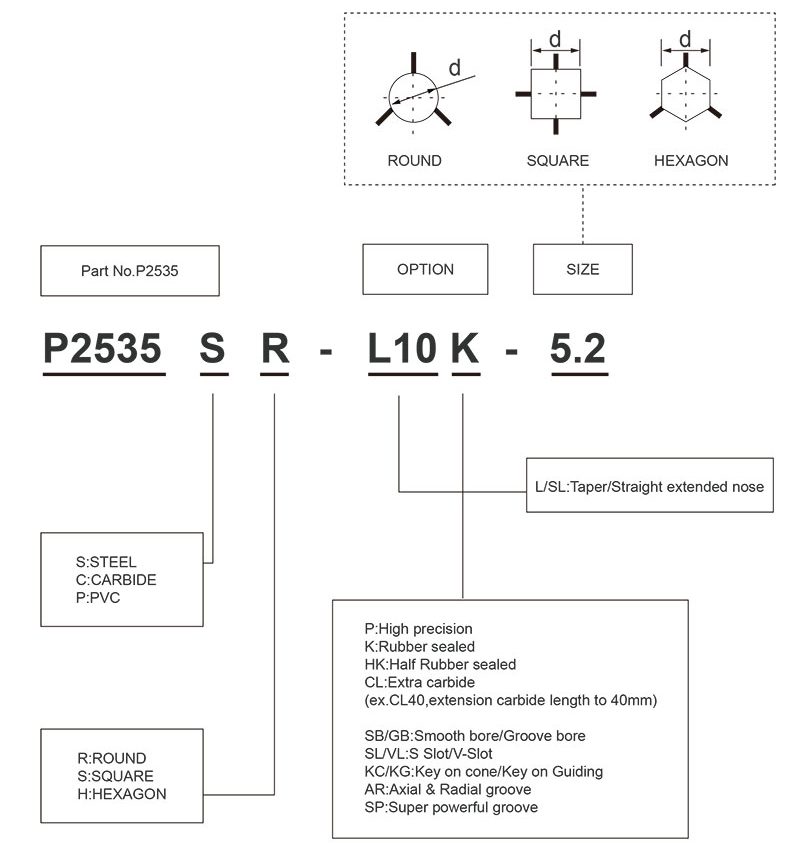
Pls check Part No written method as per...
This July, we will set to host a important visit from our Indian...

+86 13798564763

info@precollet.com

Room 39H-Y2, Fortune Building,Shenzhen, 518033, Guangdong, China


©2023 Shenzhen Zeling Precision Industry Co., Ltd. All rights reserved


